For freelance product designers
The case study took three weekends. Forty people liked it. None of them had a budget.
You design products people can actually use. Onboarding that stops people leaving, dashboards that make sense, design systems that save engineers weeks. The clients you have had are happy, and your portfolio shows it.
Finding the next client is guesswork. You post the case study, a few designers and a recruiter like it, and you wait. Dribbble and the job boards are a race to the bottom. The people who actually hire freelance designers — heads of product, founders, design leads at teams that are stretched — are on LinkedIn, and have never seen your work.
Writing to them feels like begging. Every note you try reads like a cover letter, and you would rather be designing than drafting the fortieth version of “I’d love to help with your product.”
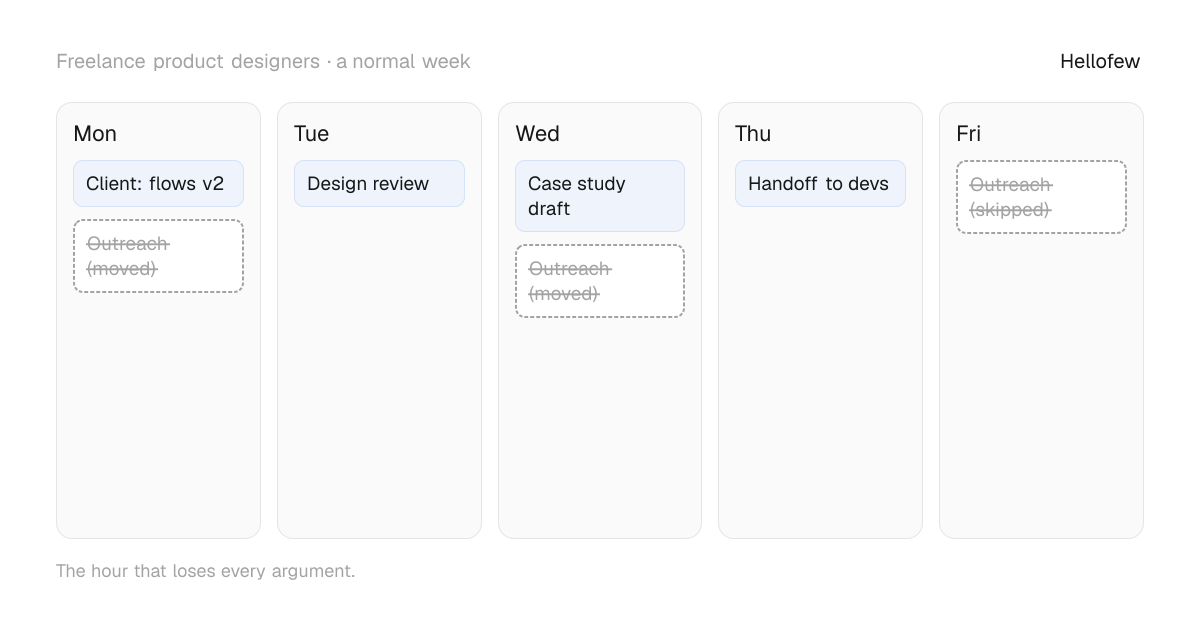
So hand over the hour
Hellofew writes those notes for you, and it writes them about the other person. You paste your portfolio or services page; agents find the product and design leaders who fit your work, read their profiles and recent posts, and write one short note per person that speaks to what they are building. You approve each one, and it sends from your own account.
What actually goes wrong
Your pipeline is the algorithm’s mood this week
A post does well and you get two enquiries. The next one sinks, and it is quiet for a month. Your income depends on a feed you do not control.
What happens instead
Up to 25 matching product and design leaders a day, found and written to every weekday, regardless of how your last post did. It does not replace posting; it stops posting being the only way in.
The people who hire you are not the people who like your posts
Designers admire your work. Founders and heads of product buy it. The first group is who your content reaches, and the second group rarely sees it.
What happens instead
The ICP targets the buyers — heads of product, founders, design leads at stretched teams — with five to eight titles you can edit. Each person comes with a fit score and the reason they were picked.
Every message you write sounds like a cover letter
“Hi, I’m a product designer with eight years’ experience and I’d love to help.” It is about you, not them, and you know it, and you cannot seem to write it any other way.
What happens instead
Notes are written from the recipient’s profile and recent posts, so they open on what the other person is building. If they posted about their onboarding or a redesign, the note speaks to that, and any quote is checked against what they actually wrote.
Chasing a lead feels desperate, and not chasing loses it
A head of product said “maybe next month” and you never followed up because you did not want to seem pushy. Next month they hired someone else.
What happens instead
One follow-up, ever, if they have not answered. Any reply cancels everything else queued for them. Replies land in one inbox, and the Monday digest lists who wrote back.
Your LinkedIn is your storefront
For a freelancer, the profile is the portfolio, the reference check and the business card. Losing it would cost you the clients who find you there.
What happens instead
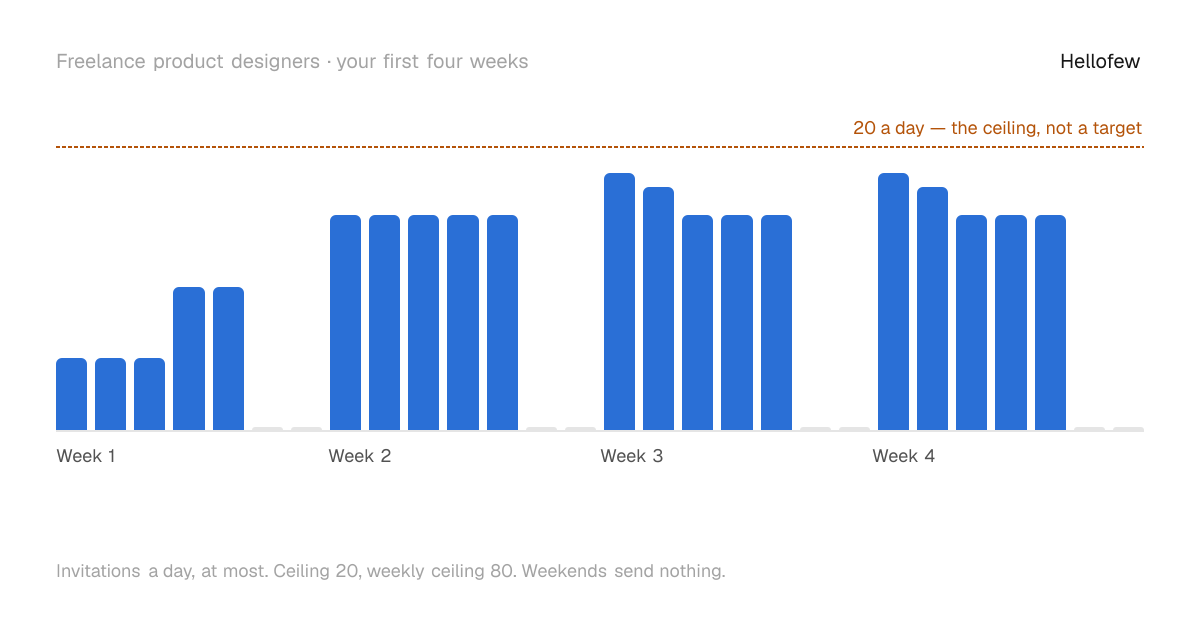
Nothing sends from an account with fewer than 150 connections. A new account starts at 5 a day and never exceeds 20, and if acceptance falls the cap halves on its own. Materially safer than the category — LinkedIn prohibits automation, so nothing is risk-free — with every limit published.
What your morning looks like instead
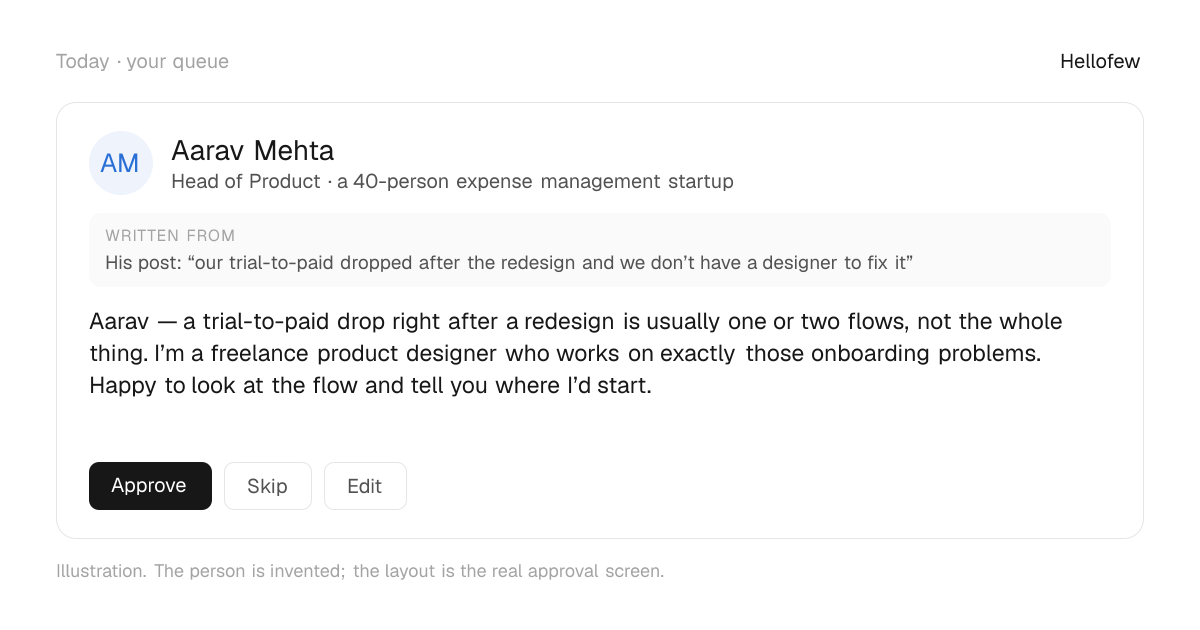
One card per person. Who they are, what the message was written from, and the message itself — so you can judge it in the three seconds you actually have. Approve, skip, or edit. Nothing goes out under your name that you have not read.
Who the agents would go looking for
Typical titles for this kind of buyer. Yours are written from your own page, and you edit them.
- Head of Product
- VP of Product
- Founder & CEO
- Design Lead
- Head of Design
- Product Director
Your first month
- 1
Paste your portfolio or services page — free, no card. Check the ICP names buyers, not other designers; that is the most common thing to correct.
- 2
Subscribe at $49/month and connect LinkedIn. About a minute later there are up to 25 product and design leaders in the queue, each with a reason and a note.
- 3
Approve three and sending starts at 5 a day, rising over three weeks towards 20. On a free LinkedIn account invitations go without a note and the personal message follows acceptance.
- 4
Accepted connections get one message and one follow-up at most. The Monday digest counts replies, and a quiet week comes with the reason.
Who this is wrong for
If you are fully booked through an agency or a long retainer, you do not need this yet. If your clients are small local businesses rather than product teams, LinkedIn is the wrong place to find them. And if you want a job rather than clients, recruiters and job boards are the better route — this writes to buyers of freelance work.
Questions
Can it link to my portfolio?
Put your portfolio and your strongest projects in the positioning and angles; the drafter uses them where they fit. Every note is short, and you can edit any draft before approving it.
Does it work with a free LinkedIn account?
Yes, with a lower weekly ceiling of 50. Free accounts invite without a note, and the personalised message is sent after the person accepts.
Is $49/month worth it for a freelancer?
A year costs $588. You know what one project is worth to you. If a single project from it does not clear that bar, do not buy it.
The first step costs nothing: paste your page and read what it writes about your market. If it gets your buyers wrong, you have learned something for free. $49/month when you connect LinkedIn and it starts finding real people.