For fractional CFOs
The founder needed you six weeks before the raise. They found you two weeks after it.
You clean up the books, build the model the investors actually believe, and make the board pack stop being a panic. For a startup that is not ready for a full-time CFO, you are the difference between a raise that closes and one that stalls in diligence.
The timing never works in your favour. Founders do not think about finance until something forces it: a term sheet, a diligence request, a cash-flow scare. By then they grab whoever an investor mentioned, and you only hear about it afterwards.
The fix is obvious. Be in touch with the right founders before the crisis, steadily, in a way that is useful rather than salesy. And it never happens, because month-end for your existing clients is every month, and prospecting is the thing that can always wait until next week.
So hand over the hour
Hellofew does it every week for you. You paste your services page; agents find founders, CEOs and heads of finance at the stage you work with, read what they post, and write one careful note per person. You approve each one, and it sends from your own account in your working hours.
What actually goes wrong
Your work is invisible until someone needs it urgently
A good fractional CFO is the reason nothing dramatic happened. That is hard to market. Founders do not search for you; they panic, and then ask an investor for a name.
What happens instead
The agents reach the founders who fit your practice before the panic. If someone posted about hiring, about a raise, or about a finance problem, the note speaks to that — and any quote is checked against what they actually wrote.
Month-end eats every week that prospecting was scheduled for
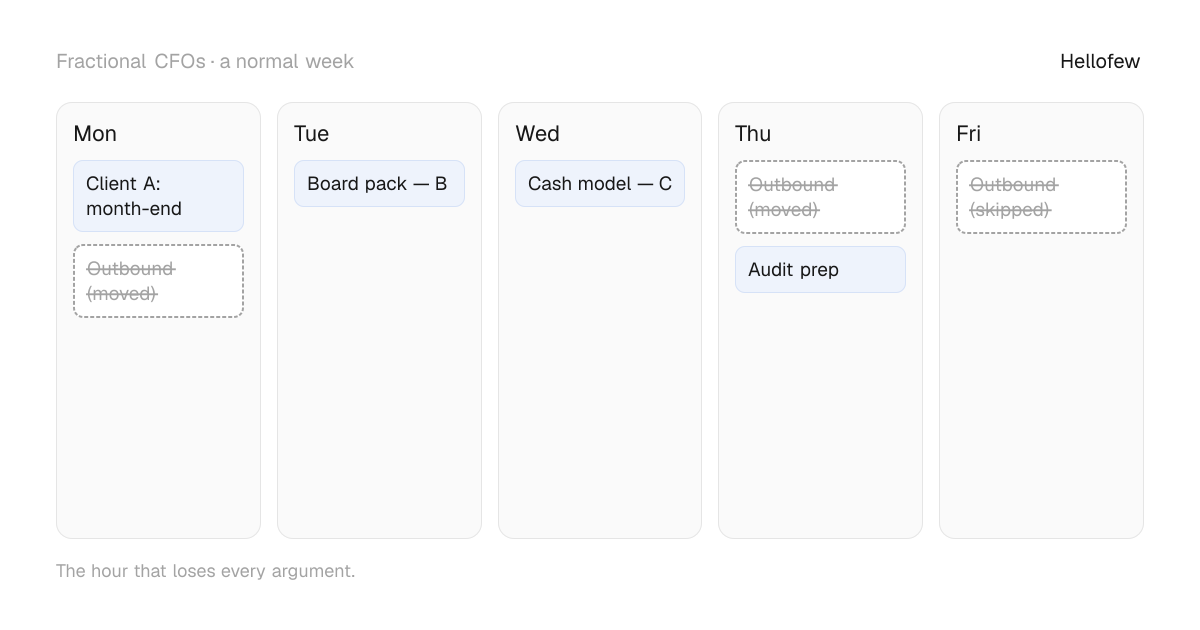
Close for client A, board pack for client B, a cash-flow model for client C. The two hours you blocked for business development become two hours of reconciliations, again.
What happens instead
Your part is a minute of approving in the morning. The research and writing happen before you open the queue, every weekday, whether or not it is month-end.
Finance is a trust business, and a template kills trust
A CFO who sends a sloppy, generic message is advertising sloppiness. Your prospects are about to hand you their bank access; the first thing they see from you has to be precise.
What happens instead
Every note is written for one person from their profile. Near-duplicates are thrown out and rewritten, and nothing goes out that you have not read. One follow-up, ever — a CFO who chases five times is not one anybody hires.
Your LinkedIn is where investors send founders to check you
When an investor refers a founder, the founder looks you up. A restricted account, or one visibly blasting invitations, costs you the referrals that matter most.
What happens instead
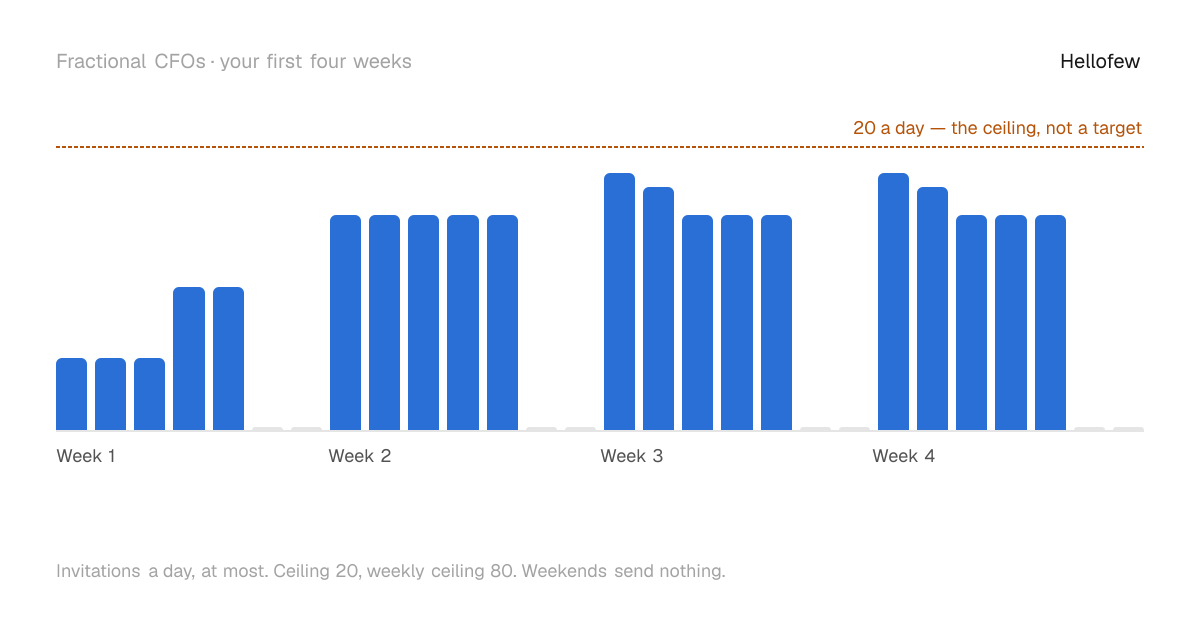
At most 20 invitations a day, 80 a week, reached over three weeks. Acceptance is watched from day four and caps halve on their own if it falls. Nothing sends from an account under 150 connections. Materially safer than the category, with limits published — not a promise that LinkedIn will never object.
What your morning looks like instead
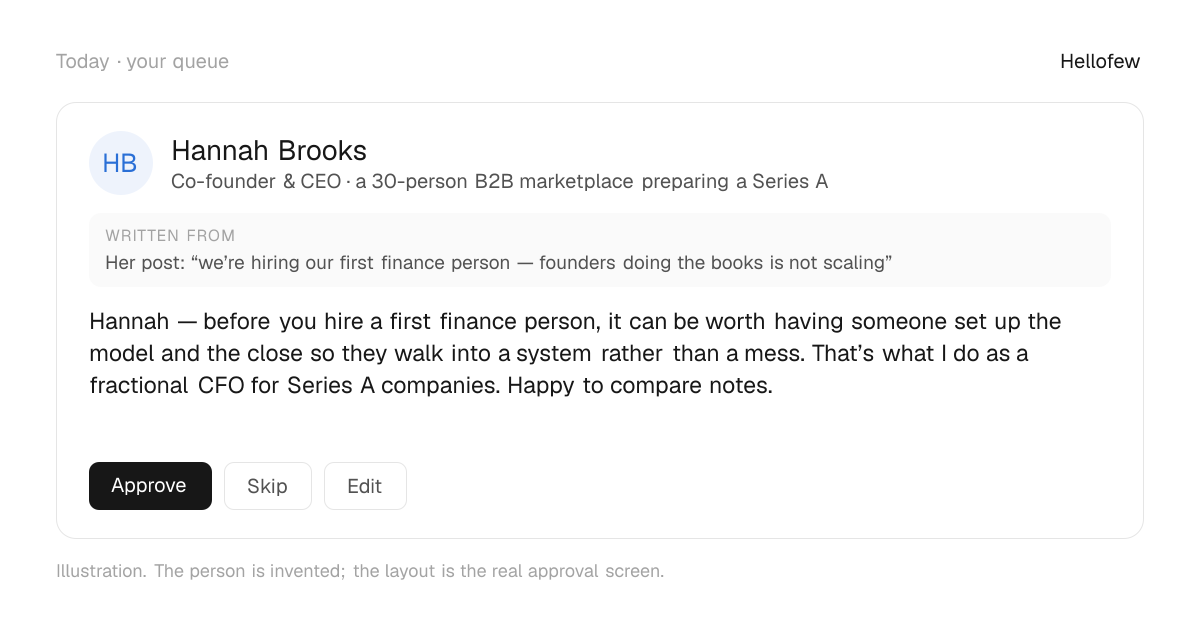
One card per person. Who they are, what the message was written from, and the message itself — so you can judge it in the three seconds you actually have. Approve, skip, or edit. Nothing goes out under your name that you have not read.
Who the agents would go looking for
Typical titles for this kind of buyer. Yours are written from your own page, and you edit them.
- Founder & CEO
- CEO
- Chief Operating Officer
- Head of Finance
- Finance Manager
- Managing Director
Your first month
- 1
Paste your services page — free, no card. Make sure the ICP names the stage you work with; a pre-seed founder and a Series B CEO need very different notes.
- 2
Subscribe at $49/month and connect LinkedIn. About a minute later there are up to 25 people in your queue, each with the reason they fit.
- 3
Approve three and sending starts at 5 a day, climbing over three weeks towards 20, never outside your working hours.
- 4
Accepted connections get one message and one follow-up at most. The Monday digest counts replies, and says plainly when a week produced none.
Who this is wrong for
If your work comes reliably through accountants, lawyers and VCs who refer you, that channel is better than cold outreach. If you run a finance firm with a team of bookkeepers to keep busy, you need more volume and seats than one account can give. And if your clients are small local businesses that do not live on LinkedIn, this will not find them.
Questions
Can it tell which startups are about to raise?
Not from a funding feed. It reads each person’s profile and recent posts, so a founder who has written about fundraising or hiring a finance lead will score higher and get a note that reflects it.
Is it appropriate for a regulated profession?
Every message waits for your approval, so you decide what goes out under your name. Anyone who asks not to be contacted is added to a permanent do-not-contact list. Whether cold outreach suits your professional body’s rules is for you to check.
How much of my week does it take?
About a minute a day to approve or skip. Replies land in one inbox, and the Monday digest summarises the week.
The first step costs nothing: paste your page and read what it writes about your market. If it gets your buyers wrong, you have learned something for free. $49/month when you connect LinkedIn and it starts finding real people.