For bootstrapped vertical SaaS founders
Every customer so far came from someone who knew you from the industry. You ran out of people who know you in March.
You spent years inside one industry — dental groups, freight forwarders, property managers, commercial kitchens — and you built the software you wished you had had. The first twelve customers were former colleagues, a supplier you got on with, the operator from the conference dinner.
That warm network was the whole go-to-market, and it is finished. Everyone who knew you has either bought or said no. The next hundred customers are strangers with the same job title in the same industry, and there is no marketing budget, because there is no funding and you would like to keep it that way.
Paid ads in a niche industry are expensive and mostly reach the wrong people. A generic outbound tool writes to operations directors at clinics like they are VPs at a software company. And you do not have the evenings to write two hundred careful notes yourself.
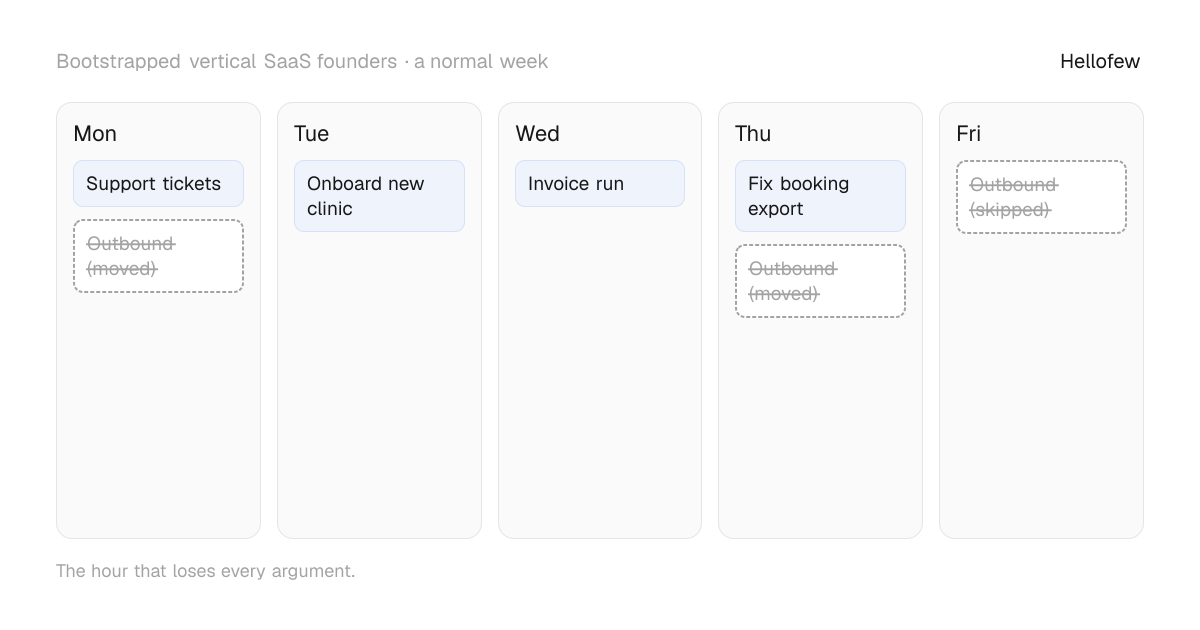
So hand over the hour
Hellofew does the writing and the finding for you, at $49/month. You paste your product page; agents propose the titles your industry actually uses, find those people, read each profile, and write a note that sounds like someone who has done the job. You approve each one, and it sends from your own account — the one people in your industry already recognise.
What actually goes wrong
Your warm network was finite, and you have used it
The referrals slowed down. The industry group chat already knows about you. The growth you had was real, but it was borrowed from relationships, and the relationships have all been asked.
What happens instead
Up to 25 new people a day who match your ICP, each with a fit score you can take apart and the reason they were picked. They are strangers, but they are the same strangers your warm network was — the same job, the same problems, a different town.
Your industry uses titles no generic tool understands
In your world the buyer is a Practice Manager, a Regional Operations Lead, a Head of Estates. A tool built for software sales goes looking for “VP of Sales” and gives you a list you would not send a single note to.
What happens instead
The ICP is written from your page and is fully editable: five to eight exact job titles, which you correct in a text box. If your industry calls the buyer something odd, write that down and the agents look for exactly that.
Bootstrapped means every dollar of spend has to be obvious
You compared the category: $250 a month here, $199 there, per-seat pricing, quarterly contracts. Against your MRR, that is a customer’s worth of revenue every month on a bet.
What happens instead
$49/month, one account, no contract, cancel and the queue stops the same day. A year costs $588, and you know what one customer in your industry is worth, so the arithmetic is yours to do. If it does not clear the bar, do not buy it.
A small industry remembers who spammed it
In a niche, everybody knows everybody. A burst of identical messages to every operations lead in the region is discussed at the next trade show, and your name is attached to it.
What happens instead
No two people get the same note with the name swapped — near-duplicates are thrown out and rewritten. There is one follow-up, ever, and any reply cancels everything else queued for that person. Anyone who asks not to be contacted is on a permanent list and never hears from you again.
What your morning looks like instead
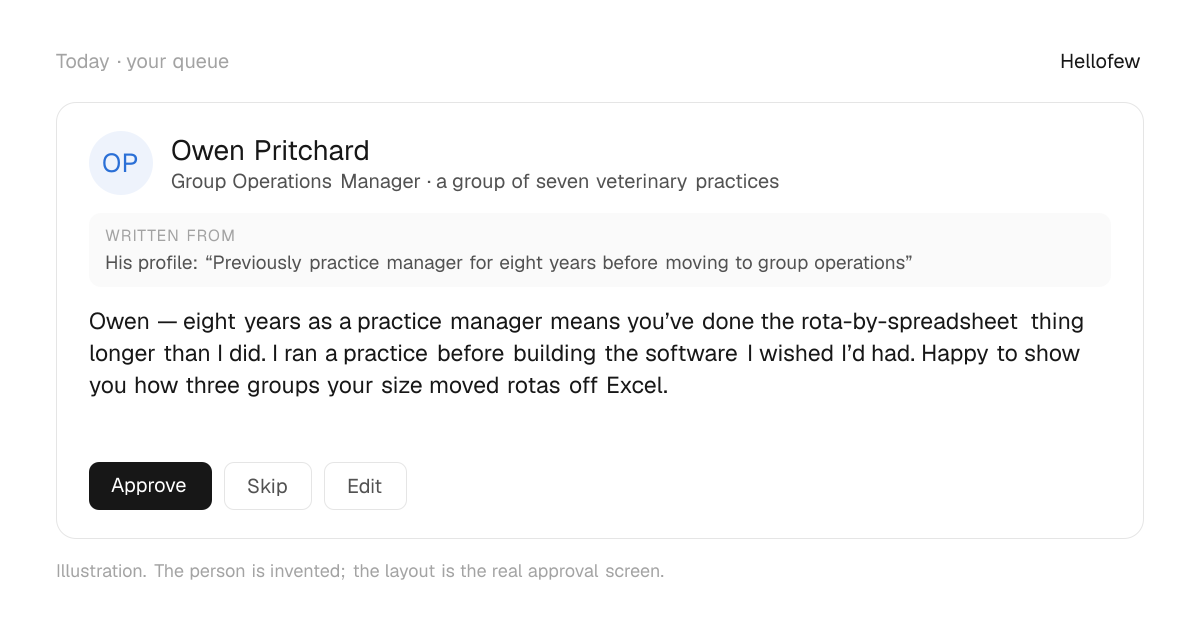
One card per person. Who they are, what the message was written from, and the message itself — so you can judge it in the three seconds you actually have. Approve, skip, or edit. Nothing goes out under your name that you have not read.
Who the agents would go looking for
Typical titles for this kind of buyer. Yours are written from your own page, and you edit them.
- Practice Manager
- Operations Director
- Regional Operations Manager
- Head of Estates
- Group Operations Manager
- Managing Director
Your first month
- 1
Paste your product page — free, no card. Correct the job titles into the words your industry actually uses; the rest of the month depends on it.
- 2
Subscribe at $49/month and connect LinkedIn. About a minute later there are up to 25 people in your queue, each with a note written from their profile.
- 3
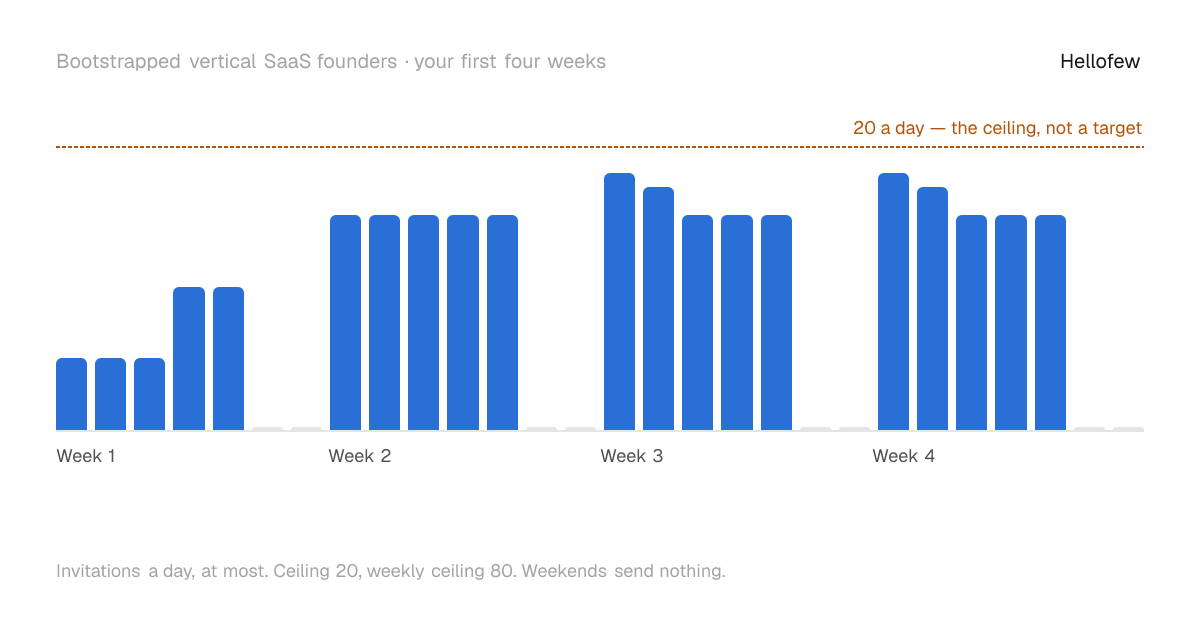
Approve three and sending starts at 5 a day, rising over three weeks towards 20, weekdays only, skipping public holidays in your country.
- 4
Accepted connections get one message and one follow-up at most. Every Monday the digest counts replies, and a quiet week comes with the reason.
Who this is wrong for
If the people who buy your product are not on LinkedIn — plenty of trades and small independent businesses are not — this cannot find them, and you should spend the money on the trade press instead. If you sell to large enterprises through procurement and tenders, cold notes are not how that works. And if your industry is so small that there are only two hundred possible buyers in the world, write to them yourself, by hand.
Questions
My buyers barely use LinkedIn. Will it still work?
Only if they are there to be found. The agents search LinkedIn by title and company, so a buyer who has no profile or never logs in will not see your note. Check your own network: if your existing customers are active on LinkedIn, their peers usually are too.
Can I make the notes mention that I worked in the industry?
Yes. Put it in your positioning and angles when you edit the ICP — the drafts are written from what you tell it about yourself plus what the recipient wrote. Just make sure it is true, because it is going out under your name.
What does it cost me in time each day?
About a minute to approve or skip the queue. There is no sequence to design and no list to upload.
The first step costs nothing: paste your page and read what it writes about your market. If it gets your buyers wrong, you have learned something for free. $49/month when you connect LinkedIn and it starts finding real people.