For agencies
Every good client came from a referral. That is why you cannot predict next quarter.
Your agency is good at the work. Most of your clients found you through somebody who had worked with you before, and the ones who stayed have stayed for years. What you do not have is a way to decide who the next client is, rather than waiting to find out.
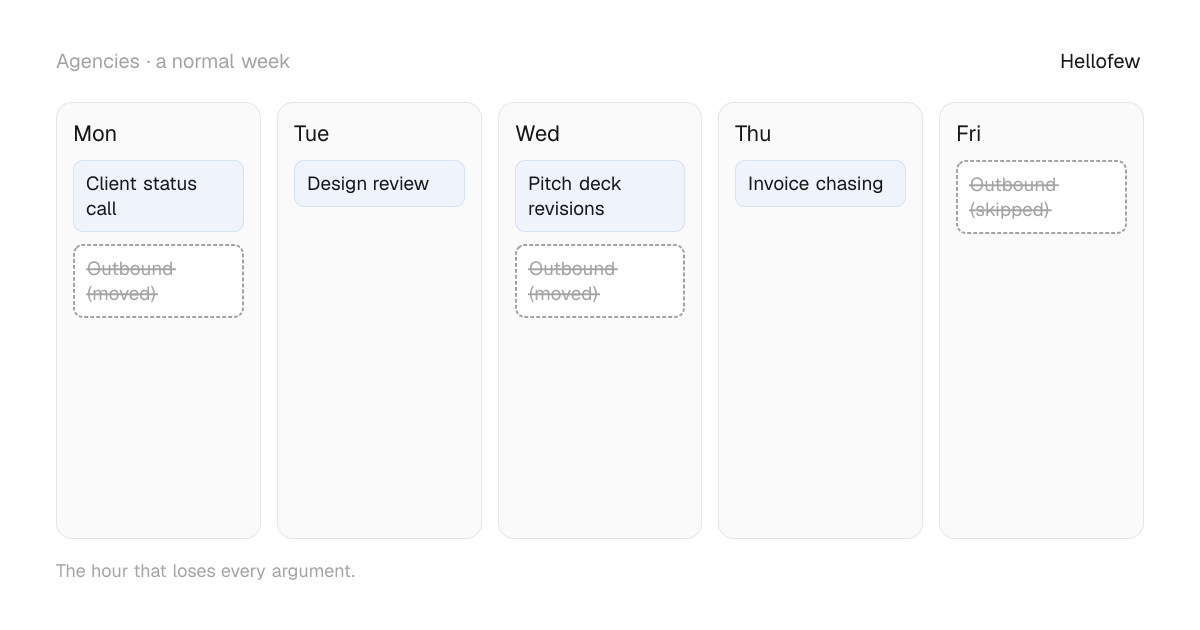
So the pipeline follows your calendar in the worst way. When you are busy delivering, nobody is selling. When a project ends, you are suddenly selling from a standing start, to anyone, with a slightly desperate note you would never have sent in a good month.
So hand over the hour
Hellofew keeps the selling going while you deliver. Paste your agency's site or a case study page; agents turn it into the titles of the people who hire agencies like yours, find them, read each profile, and write one note per person. You approve them in a minute over coffee. It sends from your own account, follows up once, and stops as soon as anyone replies.
What actually goes wrong
Feast, then famine, then panic
Three big projects land at once and you stop thinking about pipeline. Two of them end in the same month. Now you are in the gap, sending forty invitations on a Sunday night and hoping one of them turns into a brief by Friday.
What happens instead
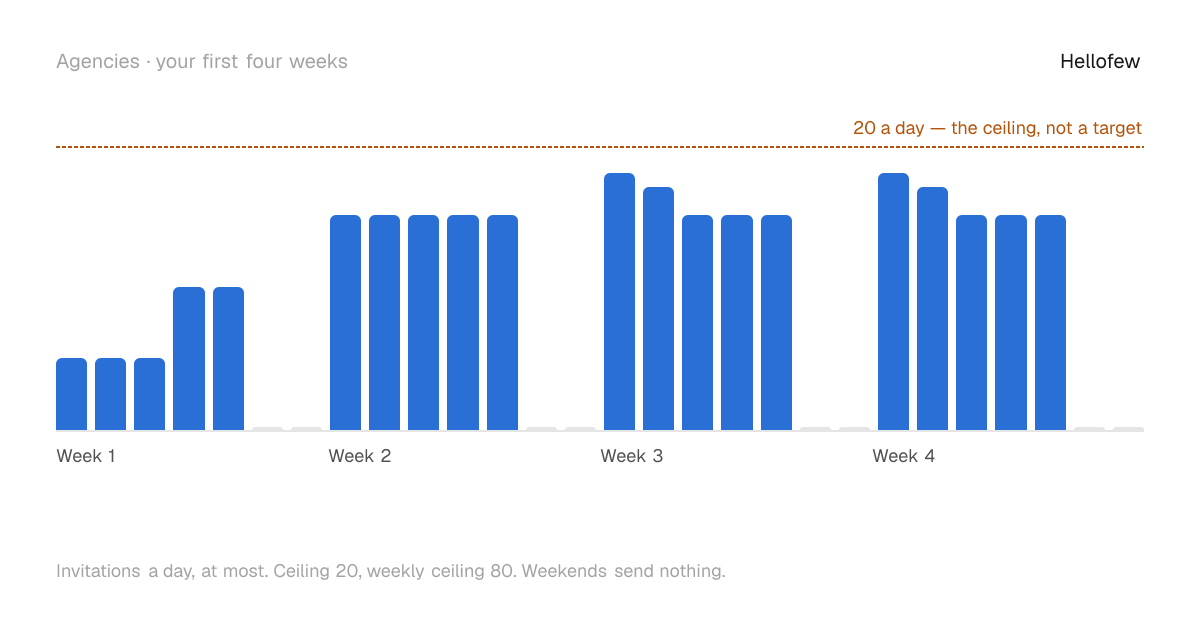
The agents run every weekday regardless of how busy you are, inside your working hours, at irregular gaps. That steady rhythm — a ceiling of 20 a day, reached over three weeks — is what builds a pipeline that is already warm when the next project ends.
Agency outreach all sounds the same
"We're a full-service agency that helps brands like yours grow." Every marketing director gets ten of those a week. They cannot tell yours from anyone else's, because there is nothing in it about them.
What happens instead
Each note is written from that person's profile and recent posts. If a head of marketing wrote about a rebrand that is dragging, the note can speak to that — with any quoted phrase checked, character for character, against what they actually posted. Near-identical drafts are thrown away and rewritten.
Your LinkedIn is your portfolio
Prospects look you up before they reply. Your profile carries your case studies, your team, your reputation. Getting it restricted for sending too much would cost you more than the pipeline it was meant to build.
What happens instead
Nothing sends from an account with fewer than 150 connections, and if acceptance falls, caps halve automatically; if it keeps falling, inviting stops and you are told why. No tool can promise LinkedIn will never restrict an account — this one publishes every limit so you can check it.
You want clients you would choose, not anyone with a budget
The worst clients arrive in the famine months, because you said yes to everything. A pipeline of people you picked on purpose is how you get to say no.
What happens instead
The ICP is yours to shape: industries, company sizes, the five to eight titles that actually buy. Every person in the queue comes with the reason they were picked, and skipping anyone is one click. Nothing is sent that you did not approve.
What your morning looks like instead
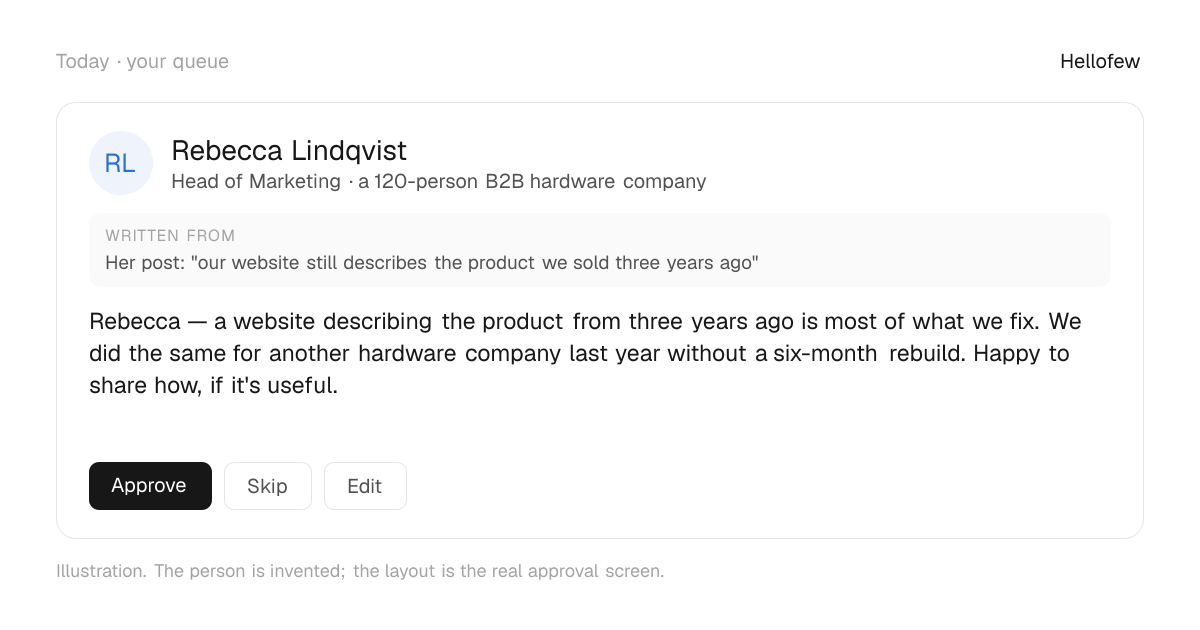
One card per person. Who they are, what the message was written from, and the message itself — so you can judge it in the three seconds you actually have. Approve, skip, or edit. Nothing goes out under your name that you have not read.
Who the agents would go looking for
Typical titles for this kind of buyer. Yours are written from your own page, and you edit them.
- Head of Marketing
- Marketing Director
- VP of Brand
- Head of Digital
- Chief Marketing Officer
- Head of Product
Your first month
- 1
Paste your agency site or your strongest case study and read the ICP it writes — free, no card. It is also an honest read on whether your positioning says who you are for.
- 2
Subscribe at $49/month and connect LinkedIn — yours, as the founder, since that is the profile prospects will check. About a minute later, up to 25 people who hire agencies like yours, each with a note written for them.
- 3
Approve three and sending starts: 5 invitations a day, rising over three weeks towards 20, weekdays only, never at the edges of your working day.
- 4
Accepted connections get one message and one follow-up. Replies land in one inbox and stop everything queued for that person. Monday's digest tells you who replied, and says why on a quiet week.
Who this is wrong for
If your agency has a business-development team running outreach from several accounts, this is too small — it runs one LinkedIn account for one person. If you sell to local consumer businesses that do not live on LinkedIn, it is the wrong channel. And if you want to reach every marketing director in a region this month, it will not: 20 invitations a day is the ceiling.
Questions
Can my account manager use it instead of me?
It runs one LinkedIn account, and it should be the account of whoever is doing the selling. For most small agencies that is the founder, because that is the profile prospects look up.
Will it mention our case studies?
It writes angles from the page you give it. Give it a case study page and the angles will draw on that work. You can edit the three angles and the sample note directly.
What if someone we already work with comes up?
Skip them — one click, and they are not contacted. A reply from anyone cancels everything queued for them, anyone who asks not to be contacted is never contacted again, and the ledger of who you have already approached means nobody is approached twice by accident.
The first step costs nothing: paste your page and read what it writes about your market. If it gets your buyers wrong, you have learned something for free. $49/month when you connect LinkedIn and it starts finding real people.