For B2B coaches
You spend your days helping leaders have better conversations. Starting one with a stranger on LinkedIn still feels wrong.
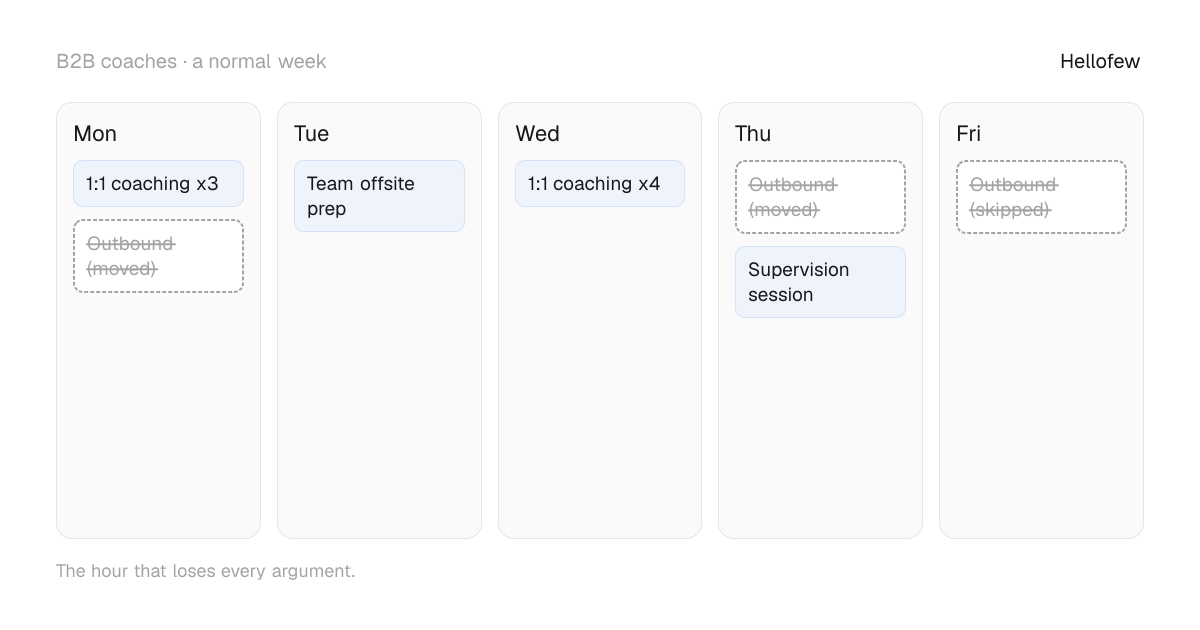
You coach executives and leadership teams. Companies pay for it, usually through a people or L&D budget, sometimes a CEO directly. Your best clients came through word of mouth, and your calendar has gaps that word of mouth does not fill.
Selling coaching is delicate. The whole relationship is built on trust and discretion, and the category is full of people posting motivational quotes and sending "I help leaders unlock their potential" to anyone with a title. Your LinkedIn profile is how a Head of People decides whether you are serious. It cannot become a broadcast channel.
So hand over the hour
Hellofew reaches the people who buy coaching, one careful message at a time. You paste your coaching page; agents turn it into the titles and angles that fit, find those people, read their profile and recent posts, and draft a note each. You approve every word before it goes. It sends from your account slowly, follows up once, and stops as soon as anyone replies.
What actually goes wrong
Word of mouth fills the calendar in waves
A cohort of clients finishes at the same time and suddenly there are three empty slots a week. You only realise the pipeline is empty when the invoices stop.
What happens instead
The agents find and write to new people every weekday, so conversations are open before the current engagements end. Your part is approving the morning queue.
The coaching category sounds the same
"Unlock your leadership potential." "Empower your team." Buyers have learned to ignore it. What cuts through is something specific to their situation — a reorganisation they posted about, a new role they just started.
What happens instead
Each note is written from the recipient's own profile and posts. People new in a role are recognised as new, and every quote is checked verbatim against what they wrote — nothing is attributed to someone who never said it.
Pressure is the opposite of what you sell
A coach who follows up four times is demonstrating exactly the behaviour they would coach a client out of. It is worse than not writing at all.
What happens instead
One follow-up, ever, and no setting to add more. Any reply cancels the queue for that person. Anyone who asks not to be contacted goes on a permanent list and never hears from you again.
Your reputation is the only asset the business has
There is no product, no platform, only you. A restricted account, or a reputation for spam in a small HR community, is not a setback — it is the business.
What happens instead
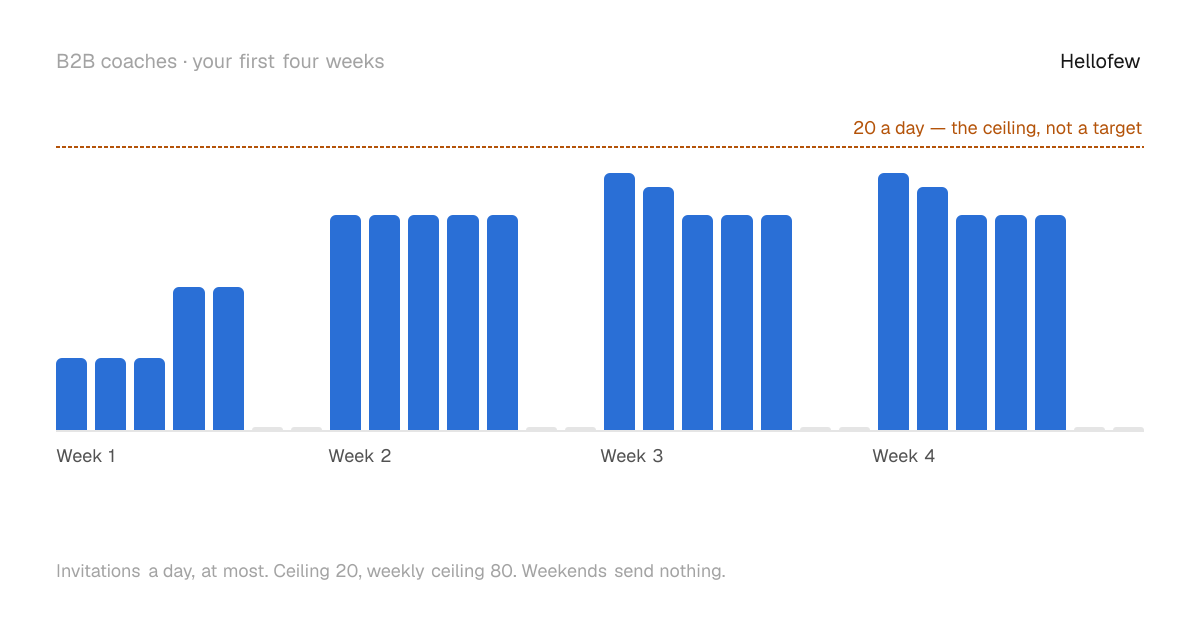
Sending ramps from 5 a day over three weeks to a ceiling of 20, only in your working hours, and nothing at all from an account under 150 connections. If acceptance falls, sending slows and then stops. Safer than the category, openly limited — never a promise LinkedIn will not act.
What your morning looks like instead
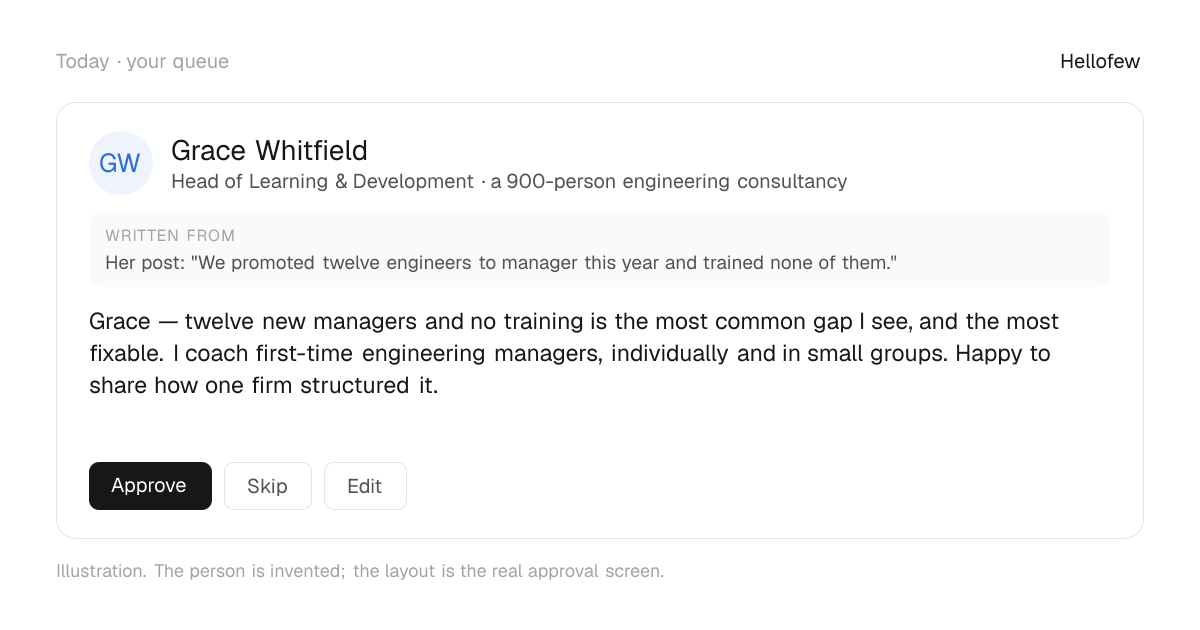
One card per person. Who they are, what the message was written from, and the message itself — so you can judge it in the three seconds you actually have. Approve, skip, or edit. Nothing goes out under your name that you have not read.
Who the agents would go looking for
Typical titles for this kind of buyer. Yours are written from your own page, and you edit them.
- Chief People Officer
- Head of Learning & Development
- VP of People
- HR Director
- Founder & CEO
- Head of Talent
Your first month
- 1
Paste your coaching page and read the ICP: who buys, five to eight titles, three angles, a sample note. Adjust the tone until it sounds like you. Free, no card.
- 2
Subscribe at $49/month and connect LinkedIn on its own sign-in page. About a minute later, up to 25 people appear with a draft each.
- 3
Approve three and it starts at 5 invitations a day, rising over three weeks towards 20. Nothing goes out unread.
- 4
One follow-up at most. Replies land in one inbox. Each Monday the digest tells you how many people replied.
Who this is wrong for
If you coach individuals who pay out of their own pocket, the buyer is often not findable by job title and this is the wrong tool. If you want to fill a group programme with hundreds of sign-ups, the caps will frustrate you. And if you mostly win through a coaching platform or panel, outbound will not change that.
Questions
Who should I target — the leader or HR?
Whoever holds the budget. Put those titles in the ICP; it can include both a Head of L&D and a CEO, and your approvals and replies will show which works.
Will it feel pushy?
You read every message before it goes. There is one follow-up, never more, and any reply stops everything queued for that person.
Is my data and my prospects' data safe?
Your LinkedIn password never reaches us. Anyone who asks to be removed is added to a global do-not-contact list within one working day, and the sub-processors are listed in full on the legal pages.
The first step costs nothing: paste your page and read what it writes about your market. If it gets your buyers wrong, you have learned something for free. $49/month when you connect LinkedIn and it starts finding real people.