For B2B fintech
The finance team runs month-end on a spreadsheet you could replace in a week. They have never heard of you.
You built something for finance teams — spend management, reconciliation, treasury, payments. You have seen the spreadsheets. You know the day each month when the controller does not go home. Your product removes that day.
But finance leaders are the most sceptical buyers there are, and for good reason: a bad vendor in their stack is an audit finding. They do not answer breezy messages, they do not click links from strangers, and they remember who pushed. Most outbound tools are built to push.
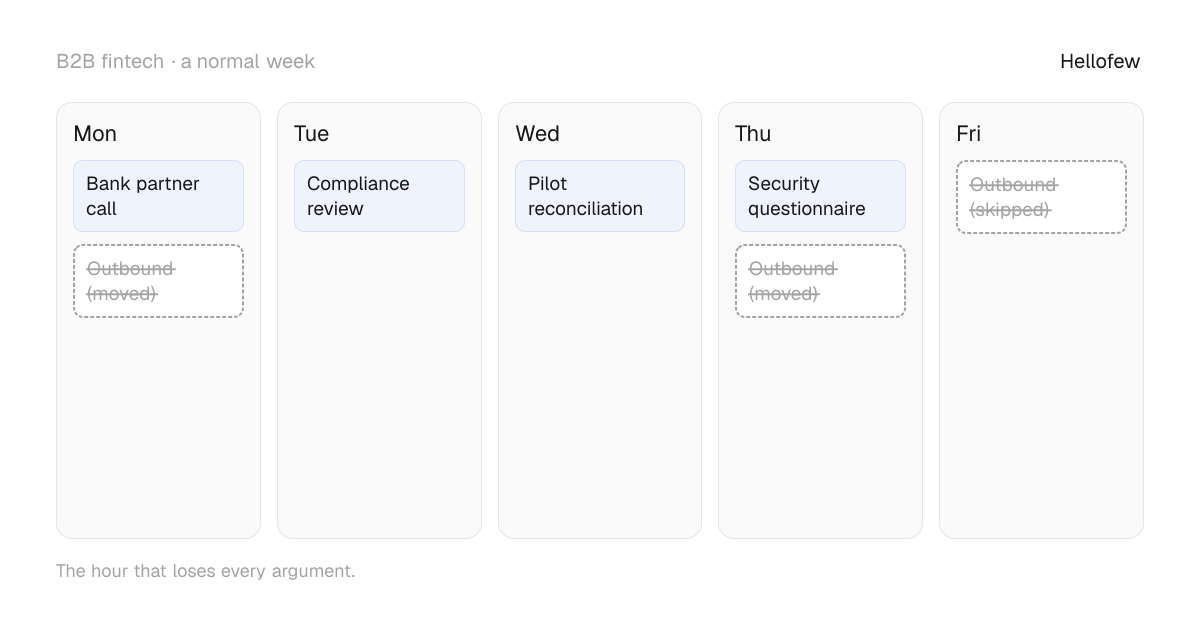
So hand over the hour
Hellofew is built to be considered rather than pushed. Paste your product page; agents turn it into the finance titles that feel your problem, find those people, read their profile and posts, and write one careful note each. You approve every message before it goes. It sends from your own account, follows up once, and stops as soon as they reply.
What actually goes wrong
Finance buyers do not trust fast talkers
A controller who gets "We can save you 40% on AP costs, got 15 minutes?" hears a number with no source and a vendor in a hurry. Both are reasons to say no.
What happens instead
Notes are written from the person's own words and your positioning — no invented percentages, and nothing the ICP's angles did not say. Any quoted phrase is checked against what they actually wrote. You read every message before it sends.
Month-end means they are unreachable for a week
You send a batch on the 29th. The whole finance function is closing the books. By the time they surface, your message is under two hundred others.
What happens instead
The agents send steadily every weekday rather than in batches, inside working hours and skipping public holidays, so nothing depends on one unlucky send day. Replies arrive in one inbox whenever they come.
Long cycles need a relationship, not a sequence
Fintech deals take months and involve procurement, security review and a CFO. A five-step sequence that ends with a breakup email burns the relationship you will need in month three.
What happens instead
One follow-up, ever. Any reply cancels everything queued for that person, and the ledger of everyone you have contacted means nobody is approached twice by accident. It opens the conversation and gets out of the way.
Your profile carries regulatory credibility
In fintech, trust is the product. Prospects and partners check the founder's profile. A restricted account looks, to a finance buyer, like a company that cuts corners.
What happens instead
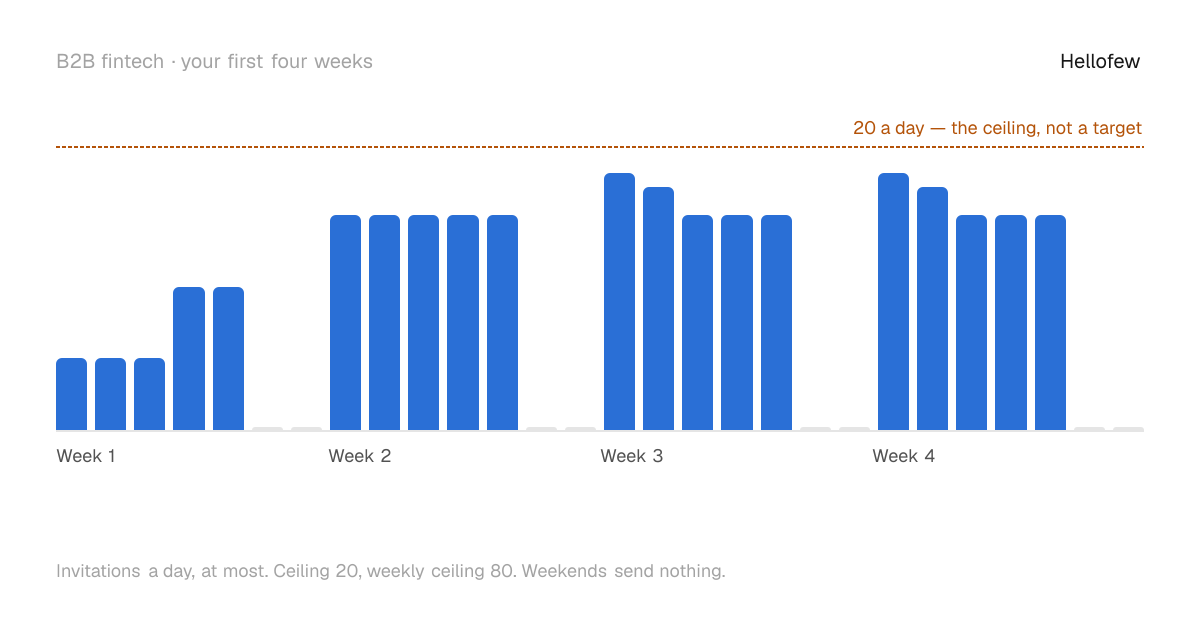
A ceiling of 20 invitations a day reached over three weeks, nothing from an account under 150 connections, and caps that halve then stop if acceptance falls. Materially safer than the category, with every limit published — not a guarantee.
What your morning looks like instead
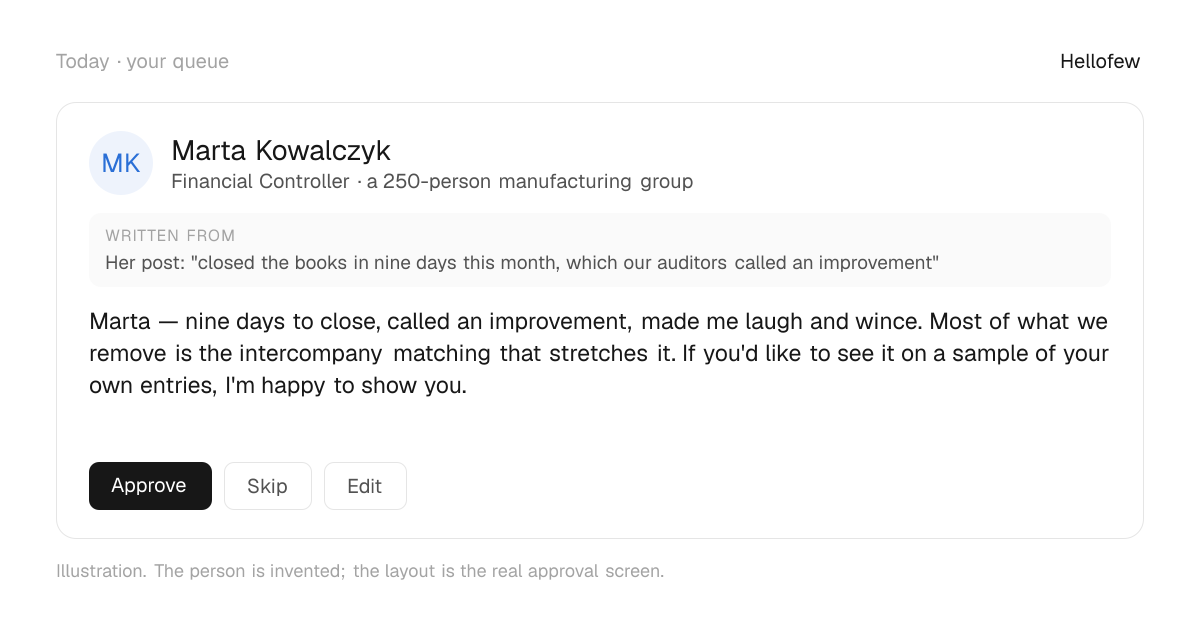
One card per person. Who they are, what the message was written from, and the message itself — so you can judge it in the three seconds you actually have. Approve, skip, or edit. Nothing goes out under your name that you have not read.
Who the agents would go looking for
Typical titles for this kind of buyer. Yours are written from your own page, and you edit them.
- Financial Controller
- Chief Financial Officer
- Head of Finance Operations
- VP of Finance
- Head of Treasury
- Accounts Payable Manager
Your first month
- 1
Paste your product page and read the ICP — free, no card. Check the angles for any claim your compliance team would not sign off, and edit it out.
- 2
Subscribe at $49/month and connect your LinkedIn. About a minute later, up to 25 finance leaders, each with a note and what it was written from.
- 3
Approve three and sending starts: 5 invitations a day, rising over three weeks towards 20, weekdays only, public holidays skipped.
- 4
One message per accepted connection, one follow-up at most. Replies land in one inbox. Monday's digest tells you who replied, and why when nobody did.
Who this is wrong for
If you sell consumer financial products, LinkedIn outbound is the wrong channel. If your deals run through an enterprise sales team with a CRM that must log every touch, this has no CRM sync and covers one account. And if your marketing claims have not been through compliance, sort that first — the notes are written from your page.
Questions
Will it make claims about savings or returns?
Only if your own page does. The ICP's positioning and angles are drawn from what you give it, and you can edit them. Every note waits for your approval.
Can I target finance teams at a certain company size?
Yes. Put the size and industry in the ICP along with the titles, and the search follows it.
Is our prospects' data handled properly?
Every sub-processor, what each one sees and how long data is kept are published on the legal pages, and anyone can be removed permanently by asking.
The first step costs nothing: paste your page and read what it writes about your market. If it gets your buyers wrong, you have learned something for free. $49/month when you connect LinkedIn and it starts finding real people.